
A 2026 guide to choosing suitable care for an aging parent in North Carolina
A non-medical caregiver visit can include companionship, meal preparation, light housekeeping, errands, and medication reminders. Hands-on personal care, such as bathing or transfers, must be agreed separately with someone qualified and permitted to provide it. Visit lengths vary by provider and need; there is no universal one-to-four-hour standard. This guide explains what a visit can involve, offers an illustrative four-hour schedule, and gives North Carolina families five steps for choosing suitable care.
What Caregivers Actually Do on a Typical Visit
Start with a written plan that identifies the agreed tasks, preferences, boundaries, and emergency contacts. Depending on the arrangement, support may include activities of daily living (ADLs), instrumental activities of daily living (IADLs), and companionship. Not every caregiver or service offers all three. [1] [2]
Personal care and hygiene
Bathing and showering assistance, including standby support for safety
Grooming and oral care — hair, shaving, brushing teeth, skin care
Dressing assistance, including help choosing weather-appropriate clothing
Toileting and incontinence care, handled with dignity and privacy
Mobility and transfer assistance only when the caregiver has the relevant training and the task is included in the agreed plan
Everyday safety support, such as keeping walkways clear and reporting changes in mobility
Help with comfortable positioning or an established movement routine only when appropriate training and written instructions are in place; this is not physical therapy
Confirm hands-on services before booking. Companion care and personal care are different, and a caregiver offering company and errands may not be able to help with bathing, toileting, or transfers. [2]
Instrumental Activities of Daily Living (IADLs)
Beyond hands-on personal care, caregivers manage the everyday logistics that keep a household running:
Meal planning and preparation that follows known preferences, allergies, and any clinician-provided dietary instructions
Grocery shopping and errands
Light housekeeping — laundry, dishes, tidying, changing linens
Medication reminders: prompting the person according to an existing schedule, without choosing doses, changing instructions, or assuming responsibility for administration
Transportation to appointments or outings when the caregiver offers it and the transport and insurance arrangements have been confirmed
Reading mail or organizing bills with permission, without taking control of accounts, cards, passwords, or spending decisions
Factual observations about changes in appetite, mood, or mobility, shared with the agreed family contact; diagnosis and clinical monitoring belong to health professionals
Companionship and Engagement
Companionship brings regular conversation and shared activities into the week. A visit can be shaped around the older adult's interests through:
Conversation, reminiscing, and emotional check-ins
Games, puzzles, reading, or hobby-based activities
Accompanying a parent to religious services, social clubs, or family events
Encouraging suitable activity, such as a short walk when it fits the person's abilities and agreed plan
Providing familiar routines and reassurance; confirm the caregiver's experience and the level of supervision needed when memory problems are involved
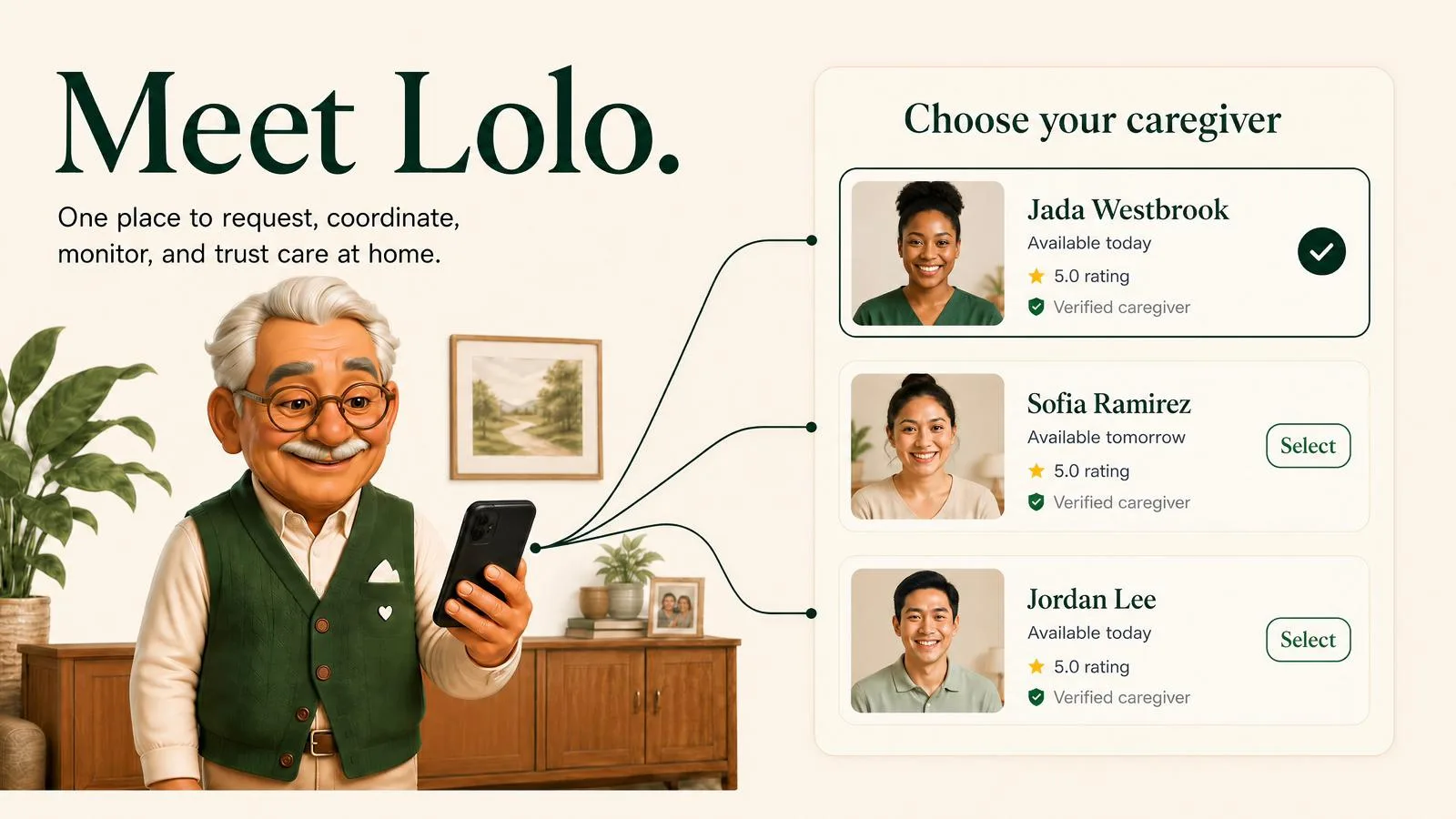
Agree on a brief visit summary: what was completed, what the older adult chose, and anything that needs follow-up. Share it only with authorized people. LoLo Care's coordination tools let authorized family members follow visit activity and review non-medical updates. LoLo is a marketplace and coordination platform; it does not employ caregivers, provide care, or supervise how care is delivered. [3] [4]
The medical and non-medical boundary
The word caregiver does not establish a person's qualifications. For a visit arranged as non-medical support, agree the permitted tasks in advance. Nursing, therapy, and other clinical work require the appropriate credentials, care arrangements, and any legally required supervision or delegation. A non-medical booking is not a substitute for that clinical service.
Type of support | Examples | Confirm before the visit |
|---|---|---|
Companion and household support | Conversation, meals, errands, light housekeeping, reminders | The caregiver offers the task and it is included in the visit |
Hands-on personal care | Bathing, dressing, toileting, and mobility assistance | Relevant training, permitted scope, and a suitable care plan |
Clinical care | Nursing, clinical assessments, wound care, and therapy | Appropriate licensed service and any required orders or supervision |
Do not treat these as ordinary tasks included in a non-medical visit:
Administer injections (including insulin) or manage IV therapy
Perform sterile or complex wound care and dressing changes
Operate or manage complex medical equipment (ventilators, feeding tubes, catheters requiring clinical management)
Medication administration, dose decisions, or changes to a prescribed schedule
Perform clinical assessments, diagnose conditions, or adjust treatment plans
Provide physical, occupational, or speech therapy
If your parent needs these services, ask their treating clinician which licensed home health, nursing, or therapy service is appropriate. Non-medical support and clinical care can work alongside each other. The right setting and schedule depend on an assessment of the person's needs, rather than a fixed ladder every family must follow. [5]
Revisit the plan when needs change, particularly after a fall, new diagnosis, or hospital discharge. Ask the treating clinician whether the person needs clinical assessment or a different level of support. For an immediate emergency, call 911.
Ask an agency: "Which services are you licensed to provide, who will perform them, and how do you decide when clinical care is needed?" For a marketplace or direct arrangement, separately verify the individual caregiver's qualifications, permitted tasks, and who is responsible for oversight.
Choosing the Right Care: A 5-Step Family Decision Framework
Step 1 Assess the level of care needed
Start with an honest ADL/IADL checklist:
Does your parent need help bathing?
Do they need a medication reminder, or clinical help with medication management?
Preparing meals?
Estimate the hours needed each week and identify the times when help matters most. A few hours of companionship and errands is a different arrangement from continuous supervision for safety or memory concerns. Include your parent's preferences and ask their clinician about needs that are unclear.
Step 2 Compare care models and the full cost
Compare services and a realistic weekly schedule before comparing prices. Hourly home support, housing-based care, and skilled nursing include different things:
In-home support: ask for an hourly quote, visit minimums, included tasks, and any extra charges. Agency-managed care and marketplace arrangements have different staffing and coordination responsibilities.
Assisted living: compare housing, meals, personal assistance, and the charges for additional services.
Memory care: ask about the supervision, staffing, and support available for the person's specific needs, as well as the full monthly cost.
Skilled nursing: ask the clinical team about the level of nursing or rehabilitation needed and confirm costs and coverage directly with the provider and insurer.
LoLo Care: the website advertises care starting at $30 per hour and visits starting at one hour, subject to availability. Review the selected caregiver's price and the visit total before booking. [6] [3]
Local agencies: request a current written quote and minimum visit length. Rates and minimums vary; a four-hour minimum is not a rule for every agency.
For a planning example, three four-hour visits each week at $30 per hour would cost $360 a week, or about $1,560 per month using 52 weeks divided by 12. This is an illustration, not a provider quote, and excludes any additional charges. Confirm the actual schedule and total before committing.
Step 3 Verify licensing and screening
When considering a home care agency, check its listing with the North Carolina Division of Health Service Regulation and confirm the services covered by its license. Ask about background screening, relevant training, references, insurance, and whether the caregiver is an employee or an independent provider. Employment status alone does not establish screening quality. For a marketplace or direct hire, clarify which responsibilities remain with your family. [7] [2]
Step 4 Interview providers
Ask how caregivers are selected, how the written visit or care plan is updated, and what happens if the regular caregiver is unavailable. For a marketplace, ask what replacement support is actually available. Vague answers about qualifications or permitted services, and pressure to commit immediately, are reasons to slow down and ask for written details.
Step 5 Plan for payment
Original Medicare generally does not cover ongoing personal or custodial care when that is the only help needed. It may cover part-time or intermittent home health aide services alongside qualifying skilled care when its eligibility requirements are met. Check Medicare Advantage benefits with the individual plan. Other payment options to investigate include: [5]
North Carolina Medicaid programs such as CAP/DA for people who meet the program's eligibility and assessed-need requirements; confirm availability and authorization before arranging paid services [8]
VA Aid and Attendance for qualifying pension recipients, including eligible veterans and survivors; it is not an automatic benefit for every veteran or spouse [9]
Long-term care insurance, subject to the policy's benefit triggers, waiting periods, and eligible-provider rules
Private pay, often supplemented by family cost-sharing
A sample four-hour caregiver visit
This is an illustrative schedule, not a fixed routine or a promise that every task will fit. It assumes personal care is part of the agreed service and the caregiver is qualified for it. For a companion-only visit, use that time for agreed non-medical activities instead. Include travel time if an outing is planned.
Time | Illustrative activity |
|---|---|
0:00–0:15 | Arrival, check-in, review of the agreed plan and any changes |
0:15–1:00 | Agreed personal care, such as dressing or grooming, or companion activities if hands-on care is not included |
1:00–1:45 | Meal preparation and a meal, with a medication reminder if scheduled |
1:45–2:30 | Conversation, games, or a suitable short walk |
2:30–3:15 | Light housekeeping or a planned errand; allow for travel time |
3:15–3:45 | Further companionship or a quieter activity chosen by the older adult |
3:45–4:00 | Visit summary and handoff to the agreed family contact or next caregiver |
Your next three steps
List the everyday tasks your parent wants help with, and ask their clinician about any medical, mobility, or supervision concerns.
Shortlist two or three suitable options. Verify agency licensing where applicable, plus each caregiver's qualifications and screening information.
Discuss the first visit, request written tasks and prices, and agree how changes, absences, and family updates will be handled.
For everyday non-medical support, you can browse available caregivers on the LoLo Care marketplace and check whether their services, location, and availability match your family's needs.
Why family caregivers need support
AARP's Valuing the Invaluable 2026 report estimates that 59 million family caregivers of adults provided 49.5 billion hours of unpaid care in 2024. Those are estimates for the report's study period, not a count of care delivered in 2026. [10]
The report values that care at approximately $1.01 trillion. The scale helps explain why planning for outside support matters: many families are balancing care with work, other relationships, and their own health. [10]
Bringing in a caregiver for agreed tasks can give relatives time to rest or meet other responsibilities. Match the help to the older adult's needs and preferences, and include a backup plan so that one person is not expected to be available all the time.
Frequently asked questions
What's the difference between a caregiver and a home health aide?
Caregiver is a broad term. A person hired for non-medical support may help with agreed daily tasks and companionship. A home health aide may provide personal assistance as part of a home health plan under the required supervision; the title does not make the aide a nurse or authorize every clinical task. Verify qualifications and the exact scope of the service.
How long does a typical caregiver visit last?
The length depends on the tasks, the provider's minimum, and caregiver availability. LoLo accepts requests starting at one hour, while other arrangements may use longer visits or shifts. Live-in care and continuous awake coverage are different arrangements; ask exactly what is included. [3]
Does Medicare cover in-home caregiver visits?
Original Medicare does not cover personal or custodial care when that is the only care needed. Limited home health aide care can be covered alongside qualifying skilled services when eligibility rules are met. A recent hospital stay is not a universal requirement for Medicare home health coverage. Confirm your parent's eligibility and any plan-specific benefits. [5]
How should we budget for care in the Raleigh–Durham–Triangle area?
Ask for a quote for your actual tasks and weekly schedule, including visit minimums and any fees. LoLo advertises a starting rate of $30 per hour; the selected caregiver and booking details determine the total. Avoid treating a regional average or one agency's price as a quote for every provider. [6]
What should families check when comparing care in 2026?
Check current availability, rates, visit minimums, screening details, and the support offered when a caregiver is unavailable. Ask how family updates work and who can see them. Confirm benefit eligibility with the relevant program instead of relying on forecasts about future funding or waiver availability.
Can technology help families follow a caregiver visit?
How do I verify a home care agency's license in North Carolina?
Use the NC Division of Health Service Regulation's facility listings, select the home care list, and match the agency's name, location, and license information. Ask the agency for its license number and permitted services, and contact the regulator if the information is unclear. [7]
Plan a first visit that fits your parent
Choosing care is a process of identifying needs, comparing arrangements, checking qualifications, and planning the cost. A clear written visit plan gives your parent, the caregiver, and your family a shared understanding of the tasks and boundaries.
If your parent needs companionship, meal preparation, errands, or other everyday non-medical help, explore caregivers on LoLo Care. Review profiles and available services, confirm the visit details, and choose support that fits your family's routine. For hands-on or clinical needs, first confirm that the provider is qualified and permitted to deliver the specific service.