
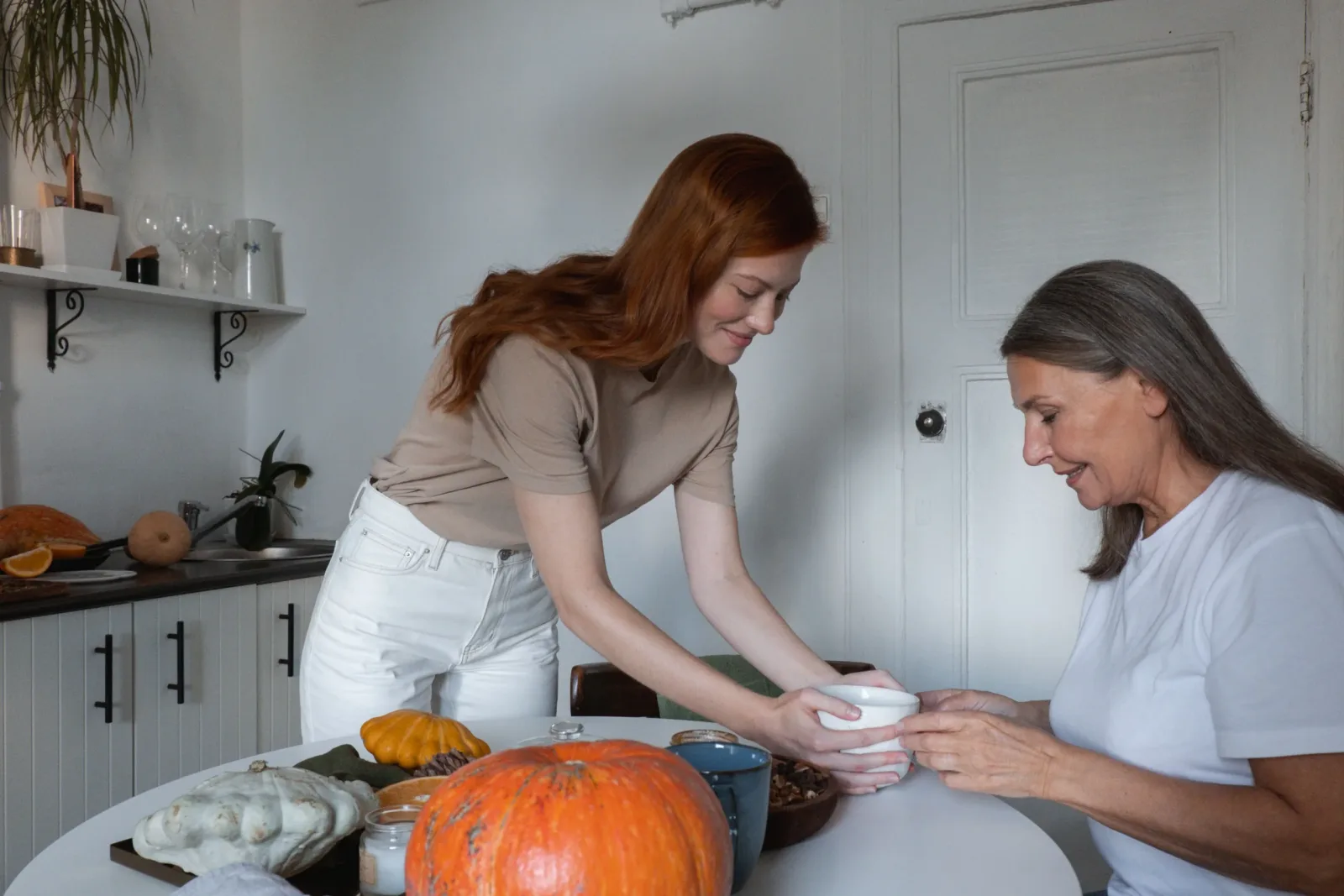
A non-medical caregiver can help an aging parent plan groceries, shop, prepare simple meals, portion leftovers, clean the kitchen, and share company at the table. The caregiver should follow known preferences and written instructions without inventing a medical diet, treating swallowing problems, forcing food, or making clinical decisions.
Quick answer
Meal help works best when the older adult chooses familiar foods and the family supplies clear allergy, texture, and storage information. A caregiver can make ordinary meals and support the routine. A registered dietitian, speech-language pathologist, clinician, or other qualified professional should guide therapeutic diets, unexplained weight loss, swallowing difficulty, or a rapidly changing appetite.
What a non-medical caregiver can do
Make a grocery list with the older adult
Shop or place a grocery order
Check ordinary labels and dates
Prepare simple meals the person likes
Wash produce and use safe food-handling practices
Portion and label leftovers with dates
Wash dishes and reset the kitchen
Sit down for conversation during the meal
Share factual observations the older adult permits
The National Institute on Aging identifies grocery access, meal delivery, meal planning, and food preparation as practical supports for older adults living at home. [1]
What is outside ordinary companion scope
A companion should not diagnose malnutrition, design a medical diet, change prescribed restrictions, manage tube feeding, treat swallowing difficulty, or make medication decisions. Feeding another person may be hands-on personal care and can carry choking risk; confirm the required qualifications and clinical instructions.
Contact the healthcare team for coughing or choking with meals, unexplained weight change, dehydration concern, repeated vomiting, a new inability to prepare or eat food, or a sudden change in alertness. Call 911 for an emergency.
A practical first-week plan
Visit one: learn the routine
Review favorite meals, allergies, kitchen layout, budget, grocery preferences, storage, and what the older adult wants to do themselves. Prepare one familiar meal together.
Visit two: build two easy options
Shop for ingredients and prepare two meals or components that reheat well. Label them clearly. Avoid filling the refrigerator with food the person did not choose.
Visit three: adjust
Ask what was eaten and enjoyed. Change portions, texture, timing, or shopping quantities within non-clinical instructions. Keep the plan simple enough to repeat.
Create a safe meal note
Include allergies, foods to avoid, known instructions from qualified clinicians, appliance quirks, safe storage, emergency contact, and whether the caregiver may purchase groceries. Use a fixed budget and receipts; do not share a banking password or broad card access.
LoLo Care connects families with independent caregivers for grocery errands, simple meal preparation, light cleanup, companionship, and routine support. [2] Visits are non-medical and subject to caregiver availability.
Frequently asked questions
Can a caregiver cook for several days?
Yes, when time, food safety, storage, and the older adult's preferences allow. Label portions and avoid preparing more than will be used safely.
Can the caregiver follow a low-sodium or diabetic diet?
They can follow clear instructions provided by the appropriate clinician or dietitian, but should not design or change a therapeutic diet.
What if my parent forgets to eat?
A reminder or shared meal may help, but frequent missed meals or cognitive change deserves appropriate professional assessment.
Does Medicare cover meal preparation?
Original Medicare generally does not cover homemaker meal preparation when it is the only service needed. Check current plan and program rules for any separate benefit.