
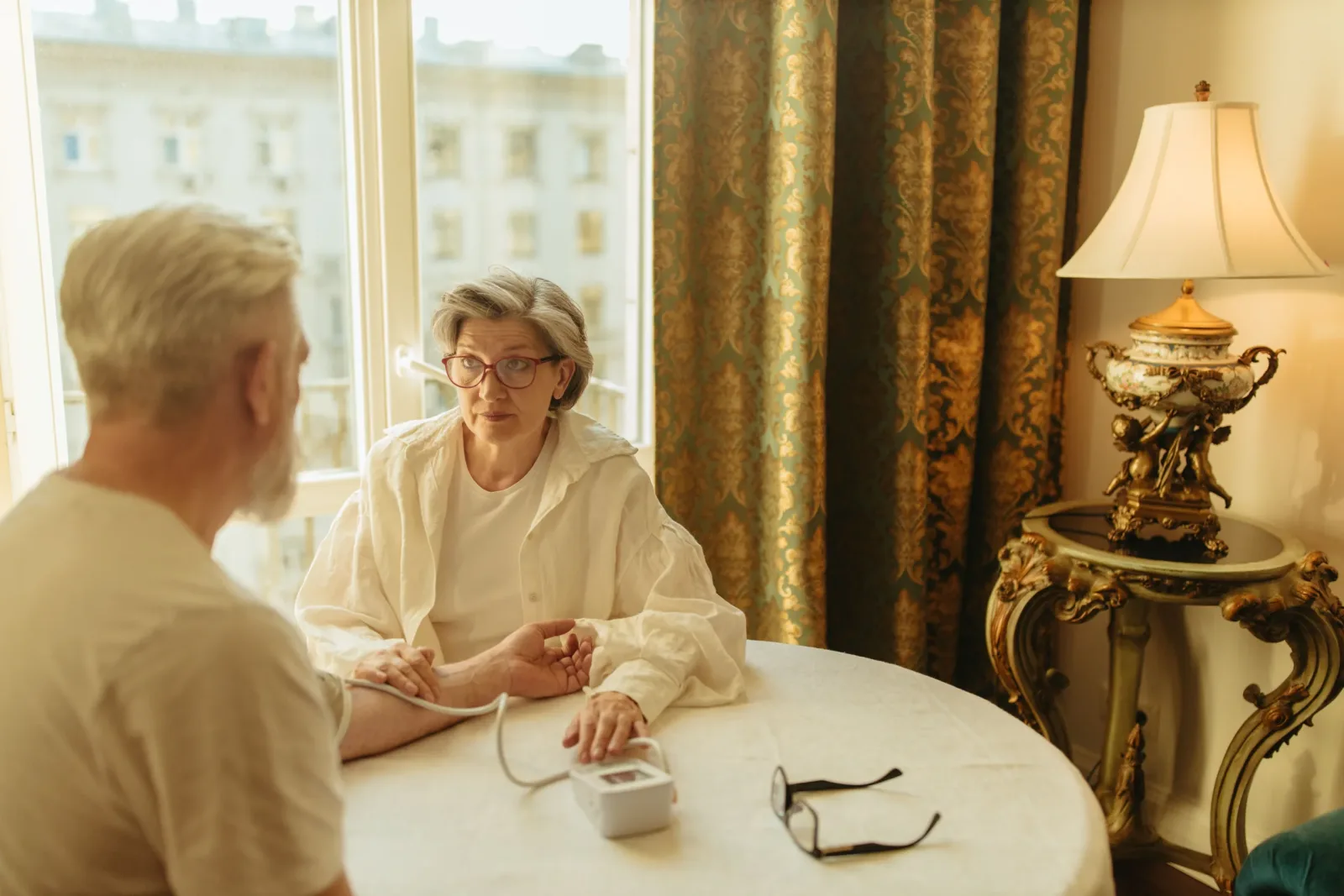
Senior care becomes confusing when several professionals use overlapping words such as care, case management, home health, and support. Start with the task and ask who owns it.
Clinical treatment
Physicians and advanced practice providers diagnose, prescribe, order services, and direct medical treatment. Nurses provide clinical care within their role. Physical, occupational, and speech therapists address specific functional and rehabilitation goals.
Home health
Medicare describes home health as ordered, qualifying care that may include intermittent skilled nursing, therapy, medical social services, and certain aide services. [2]
Home health is not generally 24-hour care, delivered meals, or routine homemaking unrelated to the clinical plan.
Discharge planning and medical social work
Hospital discharge planners, case managers, or social workers may help identify transition needs, services, equipment, follow-up, and barriers. AHRQ recommends including the patient and family, reviewing medications and warning signs, and arranging follow-up. [3]
Geriatric care management
NIA says geriatric care managers help assess needs, create plans, locate services, coordinate medical care, and evaluate living arrangements. [1] They are often privately paid.
Adult day services
North Carolina distinguishes adult day care from adult day health, which includes health monitoring or services. [4]
Non-medical caregivers
Non-medical caregivers may support companionship, meals, errands, transportation, light routines, reminders, and respite. They do not replace clinicians, therapists, social workers, or emergency services.
Use Care Options for Elderly Parents for settings and Non-Medical Home Care vs. Home Health for coverage boundaries.
Frequently asked questions
Who coordinates everything?
Sometimes a family member does; some families hire a geriatric care manager. No role automatically owns every task.
Who handles benefit eligibility?
Ask the relevant insurer, government program, benefits counselor, or qualified professional.
Can a non-medical caregiver answer clinical questions?
No. Route those questions to the licensed provider.