
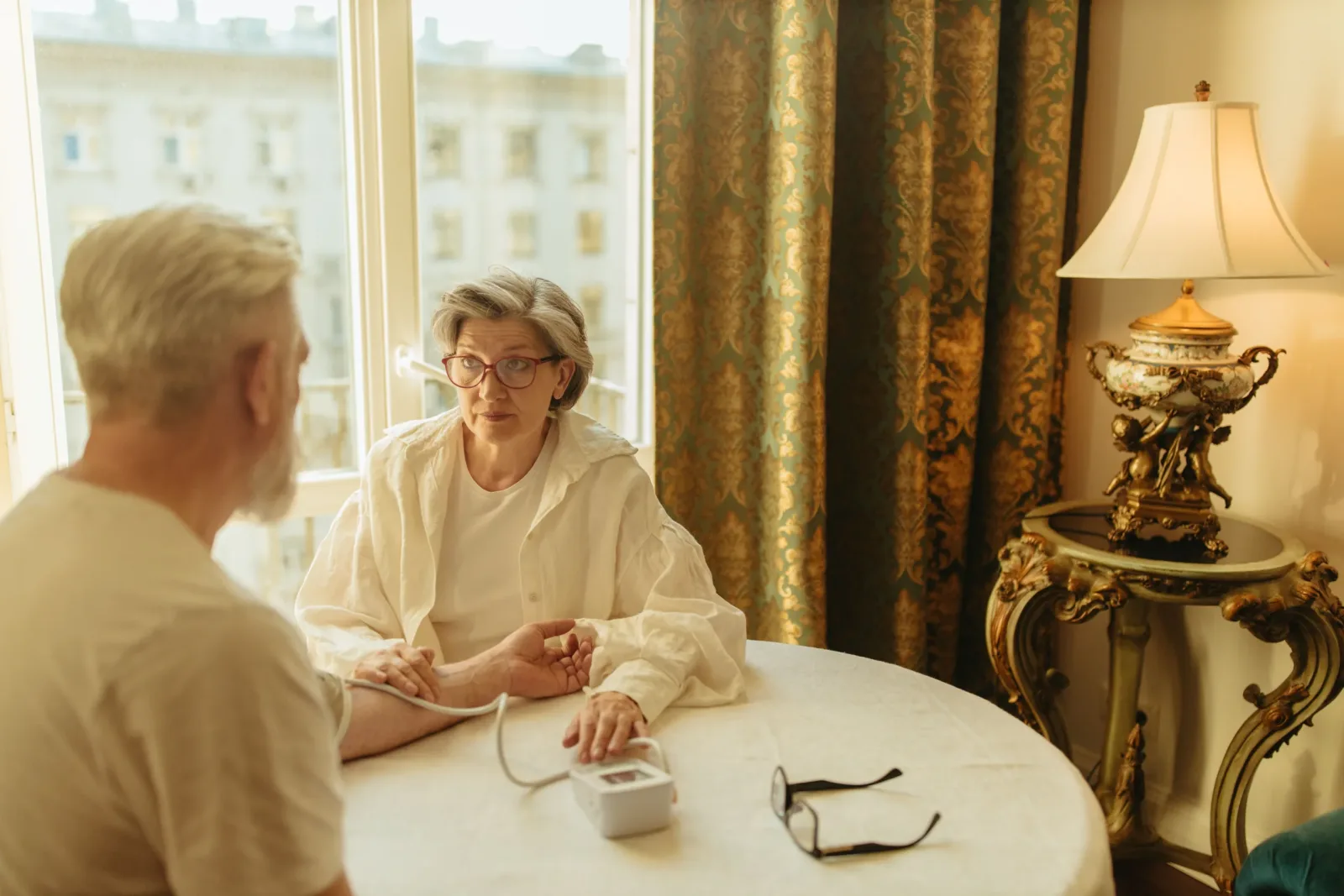
A home-safety assessment reviews how an older adult actually uses the home and where the environment, routine, or support plan creates difficulty.
Informal review or professional assessment?
Families can notice clutter, lighting, loose flooring, broken railings, hard-to-reach items, and difficult entrances. A professional assessment may be appropriate when recommendations must account for mobility, vision, cognition, recovery, or functional limitations.
NIA recommends reviewing the home room by room and reassessing as needs change. [1]
What may be reviewed
Entrances and steps
Floors and walking paths
Stairs and railings
Lighting and switches
Bathroom access
Bedroom setup
Kitchen reach and routines
Phones and emergency contacts
Mobility equipment
Everyday task patterns
CDC highlights trip hazards, grab bars, stair railings, and lighting among home fall-prevention considerations. [2]
Choose the right assessor
Depending on the need, ask a physician, occupational therapist, physical therapist, aging specialist, contractor, or qualified accessibility professional. Clinical recommendations and construction decisions require the appropriate professional.
Prioritize recommendations
Separate immediate hazards, low-cost changes, professional evaluations, contractor projects, and changes to the support schedule. Do not install unapproved equipment or use makeshift solutions.
NC DHHS describes a funded housing and home-improvement service with specific categories, eligibility, and local availability. [3]
Use Aging at Home in Raleigh as the pillar and Wake County Home Modification Resources for local starting points.
Frequently asked questions
Is a checklist the same as a professional assessment?
No. A checklist can identify questions; a professional can tailor recommendations to the person's function and home.
Does LoLo perform assessments or construction?
No. LoLo provides non-medical support.
Should the older adult participate?
Yes whenever possible. The plan should reflect their routines, goals, and consent.