
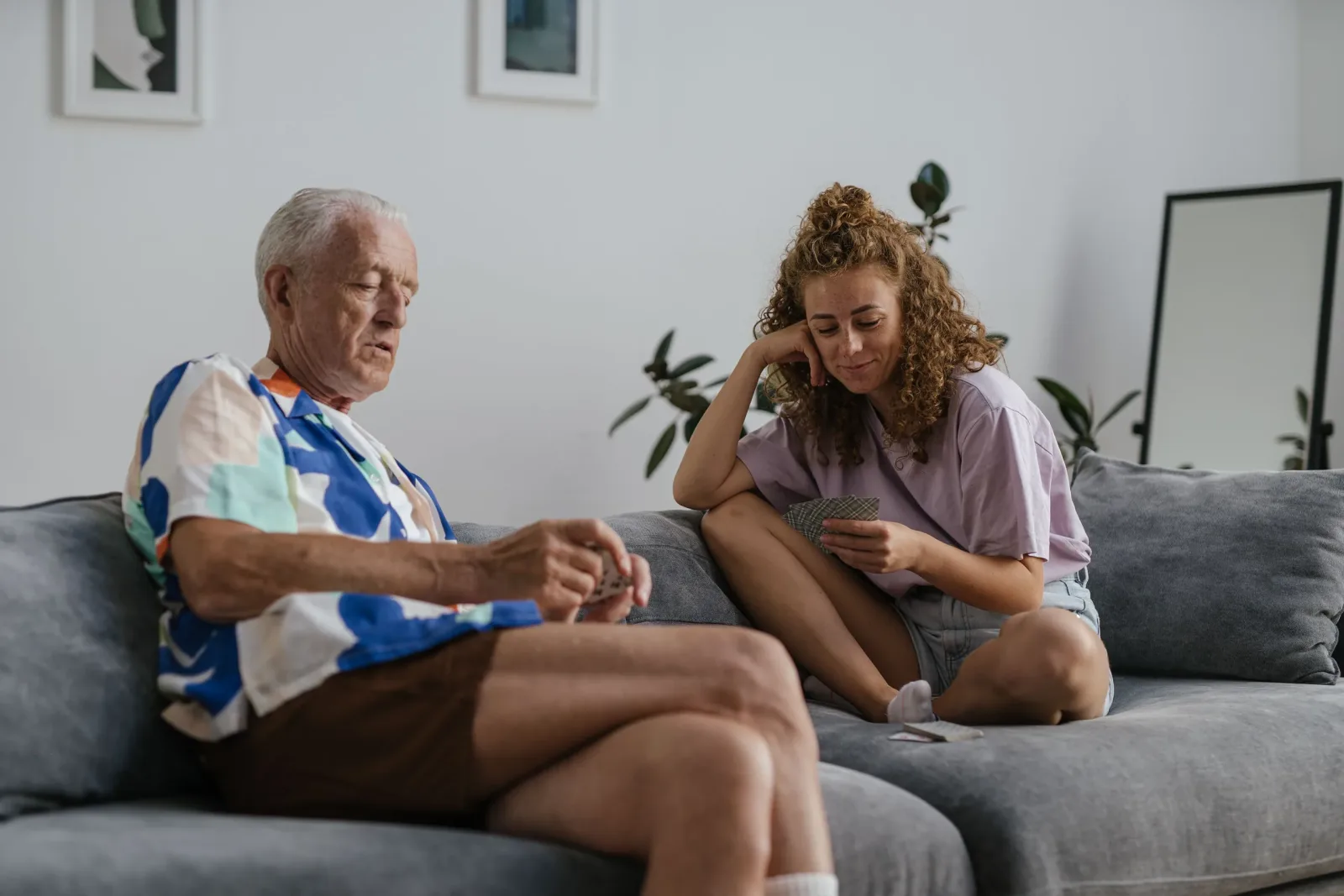
A non-medical caregiver can make daily life more manageable for a person with dementia, especially when the family needs companionship, routine support, errands, or time to rest. The role can be valuable precisely because it stays focused on everyday life.
It is not skilled nursing, medical treatment, or emergency response. The exact tasks must fit the person’s needs, the caregiver’s approved role, and the service arrangement.
Everyday support that may fit
Depending on the request, a non-medical caregiver may help with:
Companionship and conversation
Familiar activities
Simple meal preparation
Grocery shopping and errands
Light household routines
Calendar and routine reminders
Accompanied walks or outings
Transportation support when appropriate
Being present while a family caregiver takes a break
Sharing agreed observations with the family
The National Institute on Aging emphasizes adapting daily care and activities as abilities change and finding additional help when needed. [1]
Companionship is more than “keeping company”
A useful visit can create structure. The caregiver might:
Greet the person calmly and explain the plan.
Offer one or two simple choices.
Prepare a familiar snack or meal.
Join a preferred activity.
Support an established household routine.
Note meaningful changes for the family.
The goal is not to test memory or correct every mistaken detail. It is to help the person feel respected, engaged, and secure.
Activities should match the person
A caregiver may assist with music, photo albums, folding towels, gardening, a short walk, simple baking, or another familiar task. Watch for fatigue or frustration and simplify when needed.
Avoid childish activities unless the person genuinely enjoys them. Success can mean participating for five minutes, watching, or talking about the activity rather than completing it.
What about meals and reminders?
A non-medical caregiver may prepare simple meals and support a familiar mealtime routine, depending on the request. Concerns about swallowing, dehydration, unexplained weight loss, or a medically prescribed diet should be directed to the appropriate healthcare professional.
There is also an important difference between a reminder and medication management. A caregiver may be able to give a non-clinical reminder under the applicable plan, but should not choose doses, administer medications, change instructions, or make clinical judgments outside authorized scope.
Tasks that may require clinical or specialized help
Pause and seek guidance when a request involves:
Medication administration
Injections
Wound or catheter care
Clinical assessment
New or rapidly worsening confusion
Complex mobility or transfer needs
Swallowing problems
Aggressive behavior creating immediate danger
Continuous monitoring
Any task represented as nursing care
In an immediate emergency, call 911.
A family may need home health, skilled nursing, therapy, hospice, emergency care, or another qualified service. Non-medical care can sometimes complement those services, but it does not replace them.
Safety is a shared plan
Before the first visit, the family should explain:
Known exit-seeking or wandering risks
Driving and access-to-keys rules
Fall risks and mobility expectations
Emergency contacts
Preferred communication approach
Triggers and calming routines
Food restrictions
Pets, stairs, or household concerns
What the caregiver should report
What requires immediate escalation
NIA recommends reviewing home safety room by room and revisiting the plan as abilities change. [2]
A caregiver should not be placed in a situation that requires supervision beyond the agreed service level.
Questions families should ask
Which tasks are included in this visit?
Which tasks are outside scope?
Has the caregiver worked with people who have similar needs?
How will routine changes be communicated?
What is the plan if the person refuses an activity?
Who makes decisions during the visit?
Is backup coverage available?
Does the person need a level of supervision this service cannot provide?
When companion care may be a good fit
Non-medical help may fit when the person benefits from a calm presence, familiar routines, social connection, meals, errands, outings, or scheduled family respite—and when the needs remain within the agreed boundaries.
If the situation requires clinical judgment, hands-on skilled care, or continuous safety monitoring, the family should involve the healthcare team and choose a service designed for those needs.
Clear boundaries are not a limitation on good care. They are part of good care.